The UK Plastic Packaging Tax (PPT) rate rose to £228.82 per tonne on 1 April 2026, charged on plastic packaging with less than 30% recycled content (HMRC guidance). Cafés and restaurants do not register or report, but the cost lands in supplier prices on every carton of plastic cups, lids and PLA cold cups you buy.
At a glance
What you need to know
2026 position
PPT rate from 1 April 2026
£228.82 per tonne
Recycled-content threshold for exemption
30% by weight, per component
Registration threshold
10 tonnes of finished plastic packaging in any rolling 12 months
Who registers
UK manufacturers and importers of plastic packaging
Who pays in practice
Foodservice operators, through higher supplier prices
PLA and compostable plastics
Still taxable unless they hit 30% recycled content
Lid and cup
Assessed as separate components - each must hit 30% on its own
Next reform
1 April 2027 - pre-consumer waste no longer counts, Mass Balance Approach formally recognised
What changed on 1 April 2026
The rate moved up from £223.69 to £228.82 per tonne, a CPI-linked uplift that HMRC indexes annually (ERP UK). Nothing else about the tax structure changed this year - the same 30% recycled-content threshold applies, the same 10-tonne registration line applies, and the same component-by-component assessment applies.
What did change is the cumulative cost pressure on hospitality. The PPT rise has landed on top of higher National Insurance contributions and the EPR (Extended Producer Responsibility) base fees that came into force in 2025 (Food Manufacture). For an independent café running on 12-14% net margins, every £/tonne of supplier-side tax matters.
Who actually pays - and who doesn't
The legal taxpayer is whoever manufactures the plastic packaging in the UK or imports it across the border. If your supplier brings 10 or more tonnes of finished plastic packaging into the UK in any rolling 12-month period, they must register with HMRC, pay PPT on the under-30% portion, and file quarterly returns (GOV.UK).
If you run a café, takeaway, restaurant or cloud kitchen, you do not register or report. You also cannot claim it back like VAT. You pay it the way you pay any other supplier cost: it sits inside the price of every carton of single-use plastic cups, PLA cold cups, PET deli pots and plastic lids you bring in.
That distinction matters for two reasons. First, you cannot offset PPT through your accounts, so it lands as gross cost. Second, you do have the lever your supplier doesn't - you choose what to stock. Switching the format is the only way operators reduce exposure.
The real cost - a worked example
The headline rate of £228.82 per tonne sounds small until you put it against the weight of a typical foodservice order. A standard 12oz single-wall plastic-lined hot cup weighs about 10g; the matching PE lid weighs roughly 4g. A 1,000-cup carton therefore contains about 14kg of in-scope plastic (cup body + lid). On under-30%-recycled stock, that one carton carries around £3.20 of PPT, before any markup from the importer.
One carton on its own is trivial. Now scale it. A two-site café group selling 800 hot drinks a day is moving roughly 290,000 cup-and-lid sets a year, or about 290 cartons. The PPT on that volume alone is around £930 of unrecoverable supplier-side cost embedded in the year's coffee-cup buy. Add cold cups, PET deli pots, plastic salad bowls and lid sets across the rest of the menu and the per-site exposure for a mid-size group regularly clears £2,500-£5,000 a year.
That number is the answer to the question "should I care?" - and for most operators the answer is yes, even if individual cartons feel cheap.
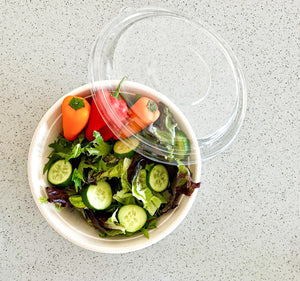
Paper-based food containers sit outside the PPT regime entirely - the cleanest format switch for operators tackling exposure.
The compostable gotcha - PLA is still taxed
The biggest misunderstanding among café operators in 2026 is that switching to compostable plastic gets you out of PPT. It does not.
HMRC's definition of "plastic" for PPT purposes explicitly includes polymers that are biodegradable, compostable or oxo-degradable (HMRC). A PLA cold cup is plastic. A CPLA cutlery set is plastic. A PE-lined paper cup counts as plastic if the plastic is the heaviest material in the component. None of these are exempt unless they contain at least 30% recycled content.
In practice, almost no PLA cup on the UK market hits 30% recycled content, because PLA is a virgin bio-based resin made from crops. The tax therefore lands on every PLA carton the same way it lands on a virgin PET cold cup. The government has said it is "keeping this aspect under review" (Cupsdirect), but for the foreseeable future, swapping to PLA is a sustainability move, not a tax-mitigation move.
If reducing PPT exposure is the goal, the materials that get you outside the tax altogether are the non-plastic ones: bagasse (sugarcane fibre), kraft paperboard, moulded fibre, and aqueous-coated paper cups where the coating is a water-based dispersion rather than a PE film. These are not "plastic packaging" in HMRC's definition at all, so PPT simply does not apply.
Lids count separately - check your suppliers
PPT is assessed component by component (Cupsdirect). A paper-based cup with a plastic sip lid will give you an exemption on the cup body but not on the lid. If you have switched your cup to a recycled-content or fibre alternative but kept the standard black PP or PS lid, you have only solved half the problem.
Operators serious about reducing PPT should audit lids alongside cup bodies. The fibre-lid and CPLA-lid alternatives perform well on hot drinks; the kraft hot cup and aqueous range pair cleanly with fibre lids and remove both the cup-side and lid-side tax exposure.
Five practical ways to reduce your exposure
Switch single-use plastic cold cups to bagasse, kraft or aqueous-lined paper. The simplest move with the largest line-item saving. Browse our hot cup range for PE-free options that sit outside PPT entirely.
Replace PLA cold cups with rPET that documents over 30% recycled content. rPET at the right blend is exempt, PLA is not. Ask your supplier for the recycled-content declaration in writing.
Audit your lids. A fibre or CPLA lid removes the lid-side PPT exposure on a hot or cold drink. PS and PP lids do not.
Swap PET clamshells and salad bowls for bagasse or moulded fibre. The bagasse food container and bagasse bowl ranges are not assessed for PPT at all.
Ask suppliers for line-item PPT data on every quote. Reputable suppliers can show the tax burden per carton. If yours cannot, that itself is a signal to compare.
What's coming in April 2027
HMRC has confirmed two structural changes that take effect on 1 April 2027 (HMRC mass balance guidance).
First, pre-consumer waste - manufacturing offcuts, regrind and trim waste generated before a product reaches the market - will no longer count as recycled content for PPT purposes. A meaningful share of "recycled" plastic packaging on the UK market today relies on this category to clear the 30% threshold. From April 2027 it will not, which means some products that are exempt today will become taxable then (Bright Sustainability).
Second, the Mass Balance Approach (MBA) will be formally recognised for chemically recycled plastic, with a mandatory certification standard. Chemical recycling lets manufacturers process mixed plastic waste back into virgin-equivalent feedstock; MBA is the chain-of-custody method that lets a manufacturer claim recycled content on a portion of output proportional to the recycled input (Pinsent Masons). HMRC will consult on the certification standard in 2026.
The practical takeaway for café operators: the universe of "PPT-exempt because it claims 30% recycled" will be narrower in 2027, and any supplier still leaning on pre-consumer offcuts for its recycled-content claim is one accounting change away from a price rise. Sourcing decisions made now should assume the 2027 rules, not the 2026 rules.
Format change at the operator end is the only lever you have - PPT cost flows through every supplier carton, but you choose what you buy.
Best for: how to sequence the switch
Three groups of products in roughly priority order, based on PPT exposure per carton and ease of switch:
First, hot drinks. The highest-volume category in most cafés. Aqueous-lined and PE-free paper cups with fibre lids remove both cup-side and lid-side PPT. Custom-branded options on our customisable range let you protect brand identity through the switch.
Second, hot food containers.Bagasse clamshells and meal boxes sit outside PPT entirely and outperform PE-lined alternatives on rigidity and heat. The kraft Biobox range works well for drier items where moisture management is less critical.
Third, cold cups and salad bowls. The hardest category to switch cleanly because PLA looks like the obvious answer and is still taxable. The right move is either rPET above 30% recycled content (verify in writing) or non-plastic alternatives where the use case allows. Treat this as the longer project - audit your menu, talk to your supplier, get the data.
Frequently asked questions
Does my café have to register for PPT?
No. Only UK manufacturers and importers crossing the 10-tonne threshold register. As an end-user buyer of packaging, you have no registration or reporting duty. The cost still reaches you through higher supplier prices.
Are compostable cups exempt from PPT?
No. HMRC treats biodegradable, compostable and oxo-degradable polymers as plastic for PPT purposes. PLA cups, CPLA lids and PE-lined paper cups are taxable unless the plastic component contains at least 30% recycled content - which most do not.
What's the PPT rate in 2026?
£228.82 per tonne from 1 April 2026, up from £223.69 the previous year. The rate is uprated annually in line with CPI.
Is bagasse subject to PPT?
No. Bagasse is sugarcane fibre, not plastic, so it sits outside the PPT regime entirely. The same applies to kraft paperboard and aqueous-coated paper cups where the coating is a water-based dispersion rather than a plastic film.
What about lids - are they assessed separately?
Yes. PPT is component by component. A fibre cup with a plastic lid will be exempt on the cup body but taxable on the lid (unless the lid plastic hits the 30% recycled threshold). Audit both.
Can I pass the cost on to my customers?
You can, and many operators do, but the typical PPT cost embedded in a coffee cup is fractions of a penny per drink. Most operators see the cleaner move as reducing exposure through format change rather than building a packaging surcharge into the menu price.
What's changing in April 2027?
Two things. Pre-consumer waste (manufacturing offcuts, regrind) will no longer count as recycled content for PPT, which will push some currently-exempt products back into scope. And the Mass Balance Approach will be formally recognised for chemically recycled plastic, with a mandatory certification standard HMRC will consult on in 2026.
How do I know if my supplier is paying the tax correctly?
Ask for the recycled-content declaration on every plastic line item and ask whether each component is over or under the 30% threshold. A reputable supplier will provide this. If your supplier cannot or will not, request quotes from one that can - the data itself is a quality signal.
Where Element fits
At Element Packaging we supply foodservice operators across the UK with PE-free, plastic-free and verified-recycled-content alternatives to single-use plastic. The hot cup range covers aqueous-lined and PE-free options that sit outside PPT entirely; the bagasse food container and bagasse bowl ranges replace PET clamshells and salad bowls without the tax exposure. If you want trade pricing and PPT-line data on every quote, open a trade account or request a sample pack from any of the collections above.
Element were amazing to work with. We had a very tight turnaround and deadline and from the first email, Adam was on it! He was very quick to respond and was great to liaise with. Artwork proofing was done so efficiently and our clients were very happy with the quality of the final product. Thank you! We will definitely use Element again for future jobs
We've been very happy with these lids. They fit securely, are sturdy, and work perfectly with our salad bowls. Great quality product and reliable for takeaway and delivery orders. Will definitely purchase again.
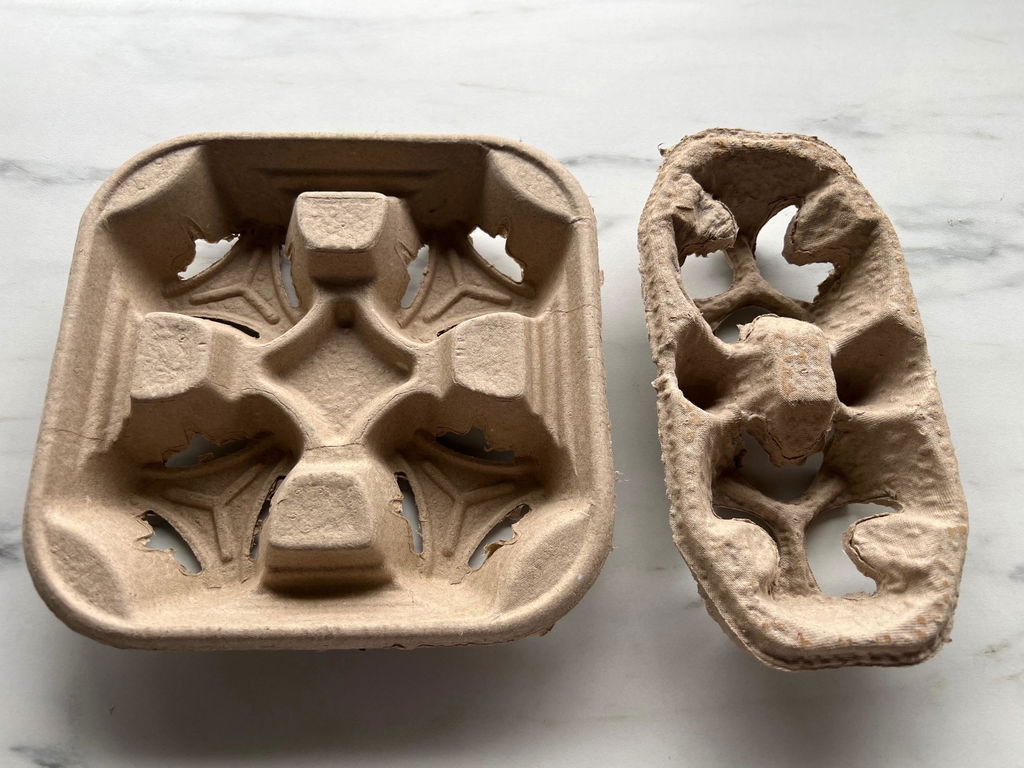
These are aesthetically ugly with brown stains, I get it probably recycled card pulp and it does the job of holding cups but I’m disappointed. Compared the 4 cup holders ones you sell, those are much nicer with cleaner edges and surfaces. I recommend you use the same supplier as the 4 cup design.