Compostable Packaging for Greasy Foods: What Actually Works in 2026
Greasy foods are the ultimate stress test for compostable packaging.
Fried chicken, loaded fries, burgers, curries, and street-food classics all generate oil, moisture and heat at the same time, a combination that can quickly weaken low-quality compostable materials.
Why Greasy Foods Break Down Packaging
Grease + heat + steam create three major performance challenges:
Heat retention needs → Food must stay warm without trapping moisture
Not all compostable packaging is designed for this environment. Choosing the right material matters.
Here is what works best for heavy, greasy foods, and why.
Molded Fibre (Bagasse) Containers
Best All-Rounder for Greasy Foods
For foods that are greasy but not swimming in liquid, molded fibre made from sugarcane pulp, often called bagasse, is one of the most reliable compostable materials available.
Bagasse containers are formed under pressure into dense, rigid shapes. That density slows oil penetration compared to thin paperboard. Because the material is thick and structurally reinforced, it maintains shape under heat and stacking pressure.
Why they perform well:
Made from sugarcane fibre
Naturally grease-resistant
Strong structure under heat
Microwave and freezer safe
Suitable for industrial composting
Available in PFAS-free options
Ideal for:
Fried chicken
Burgers
Loaded fries
Street food
Rice bowls
Hot mains
Unlike coated paperboard, molded fibre does not rely on a separate plastic lining for grease resistance. The structure of the fibre itself provides resistance. That makes it a strong option for operators who want a compostable format that performs similarly to foam or rigid plastic for fried foods.
It is important to note that molded fibre clamshells are excellent for greasy solids but are not designed to be leak-proof for liquid-heavy dishes. If oil is mixed with significant sauce or broth, a bowl-and-lid system may be a better choice.
Compostable Bowls for Saucy or Oily Dishes
If your menu includes curries, saucy pasta, rice bowls with oil-based sauces, or noodle dishes, the risk shifts from wall softening to rim seepage and lid failure.
In these cases, the integrity of the closure matters more than wall thickness alone.
Structured bowls with tight-fitting lids, such as the compostable bowls in this collectionare typically a better solution than shallow clamshells. A reinforced rim helps maintain seal tension during heat expansion and transport movement.
For operators transitioning away from plastic soup or noodle containers, testing a compostable bowl format under a realistic 30-minute hold is the safest way to confirm performance.
These formats provide:
Strong leak resistance
Good heat retention
Stackable design for delivery
Clear lid compatibility for visibility
Perfect for:
Curries
Saucy pasta
Noodles
Grain bowls
Loaded salads with oil-based dressings
Kraft Food Boxes with Compostable Linings
Best for Short-Hold Oily Foods
Some brands prefer the appearance and print surface of kraft paperboard. Kraft can absolutely be used for greasy foods, but performance depends heavily on the barrier layer.
There are three common lining types to understand:
PE lining
This is a traditional plastic lining that provides strong grease and moisture resistance. It is effective, but it is not compostable. Many kraft soup bowls use this type of lining to ensure durability, and when rinsed properly, these items can still be recycled.
PLA lining
PLA is a plant-based bioplastic used as a moisture barrier. It is commonly associated with industrial composting standards such as EN 13432. PLA-lined bowls offer a compostable barrier alternative while maintaining resistance to oil and liquid. If you are interested in PLA-lined packaging or have custom specifications our team can help! Contact us to get a quote.
Aqueous or dispersion coatings
These water-based barrier systems are increasingly used to improve grease resistance while reducing reliance on traditional plastic extrusion linings. Performance depends on coating thickness and food type.
If you prefer kraft for branding reasons, but still want your packaging to be compostable, Element Packaging has got you covered. We’d love to work with you to build a catalog of items that suit your menu and the environment.
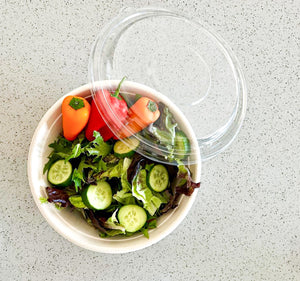
You can view our kraft salad bowls and paper-based bowl options here.
4. Clear PLA Containers for Cold, Oily, or Presentation-Driven Items
Not all greasy foods are hot. Deli salads, pasta salads, antipasti, chutneys, and oil-based cold dishes benefit from visibility.
Clear PLA deli-style containers are commonly used for these applications. PLA offers a clear appearance similar to PET while being plant-derived and associated with industrial composting systems.
These formats are generally best suited for cold or room-temperature foods. For very hot liquids, testing is recommended to confirm lid performance and heat tolerance.
If you are looking for PLA cold cups, deli pots, or specific clear compostable formats, you can enquire directly through https://myelement.co.uk/pages/contact
How to Switch to Compostable Packaging Without Compromising Durability
If you are currently using plastic or foam for heavy foods, the safest way to transition is to start with your most demanding items.
Choose one fried item and one sauce-heavy item. Package them in a molded fibre container and a lined bowl option. Close them, stack them, and let them sit for the same length of time as a typical delivery order.
Check for:
Wall softening
Oil penetration
Rim seepage
Lid shift
Stack compression
Compostable packaging for greasy foods has improved dramatically in recent years, but success depends on choosing the right format for your specific menu.
Heavy, greasy foods require packaging with structural strength and proper barrier protection. Compostable options can meet those demands when chosen correctly. If you want further guidance on what to choose, reach out to us today!
If you're reviewing your packaging for 2026, you can explore our full compostable range here:
We've been very happy with these lids. They fit securely, are sturdy, and work perfectly with our salad bowls. Great quality product and reliable for takeaway and delivery orders. Will definitely purchase again.
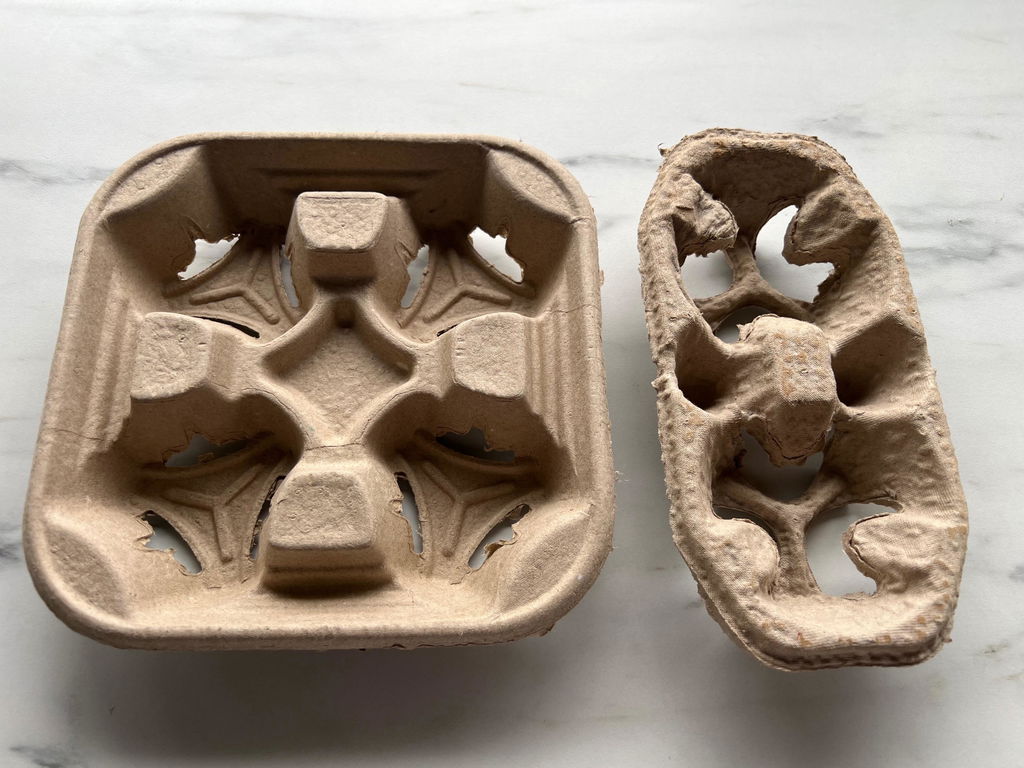
These are aesthetically ugly with brown stains, I get it probably recycled card pulp and it does the job of holding cups but I’m disappointed. Compared the 4 cup holders ones you sell, those are much nicer with cleaner edges and surfaces. I recommend you use the same supplier as the 4 cup design.