Skip to content

Guide to takeaway packaging materialsCompostable, recyclable, or neither?

Bagasse, kraft paper, PLA, PET, PP, wood and more: what each material is, what it is good for, whether it takes heat, and which bin it goes in. Plain answers, no greenwash.

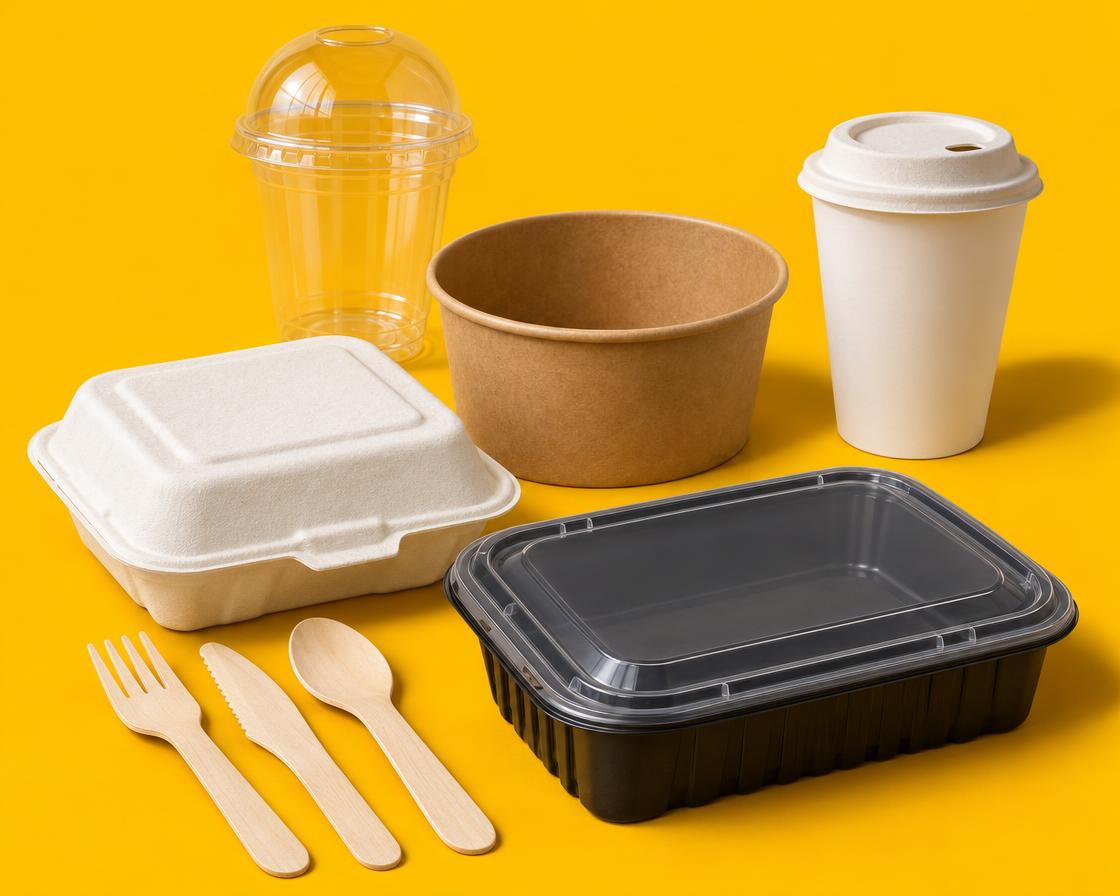
Takeaway packaging in different materials: bagasse clamshell, kraft bowl, clear PET cup, paper hot cup, birchwood cutlery and PP container
Hot foodPP, bagasse, paper hot cups, CPLA lids
Cold onlyPLA and PET soften with heat
MicrowavePP and bagasse
Compostable is not recyclableThey go in different bins

At a glance

For hot food and drinks, use PP, bagasse, paper hot cups or CPLA lids; PLA and PET are for cold use only. PP and bagasse are microwave safe. PET and rPET are recyclable when rinsed, and PP is recyclable where collected. Bagasse is industrially compostable and usually home compostable when uncoated. PLA, CPLA and PLA-lined paper are compostable in industrial facilities only and are not recyclable. Compostable is not the same as recyclable: industrially compostable items need a commercial composting service. Expanded polystyrene food containers are banned in England.

Compare

Every material, side by side.

Heat, microwave and disposal for each material we sell. "Check product" means it depends on the exact product: its page says how to dispose of it.

How each takeaway packaging material handles heat and how to dispose of it
MaterialHotColdMicrowaveRecyclableCompostableUsual bin
BagasseYesYesYesNoIndustrial, and usually home when uncoatedFood or compost waste
Moulded fibreDry itemsYesNoWith card, when cleanYesCard recycling when clean
Kraft paper with PE liningYesYesCheck productCheck productNoSee product page
Paper with water-based liningYesYesCheck productCheck productCheck productSee product page
Paper with PLA liningYesYesCheck productNoIndustrial onlyCommercial compost service
PLANoYesNoNoIndustrial onlyCommercial compost service
CPLAYesYesCheck productNoIndustrial onlyCommercial compost service
PET and rPETNoYesNoYes, when rinsedNoPlastics recycling
PPYesYesYesWhere collectedNoPlastics recycling where collected
BirchwoodYesYesNoNoYesFood or compost waste
Cornstarch blendYesYesCheck productCheck productNoSee product page

Materials

Find the right material for the job.

Tap what you need and the materials that fit stay lit.

11 materials
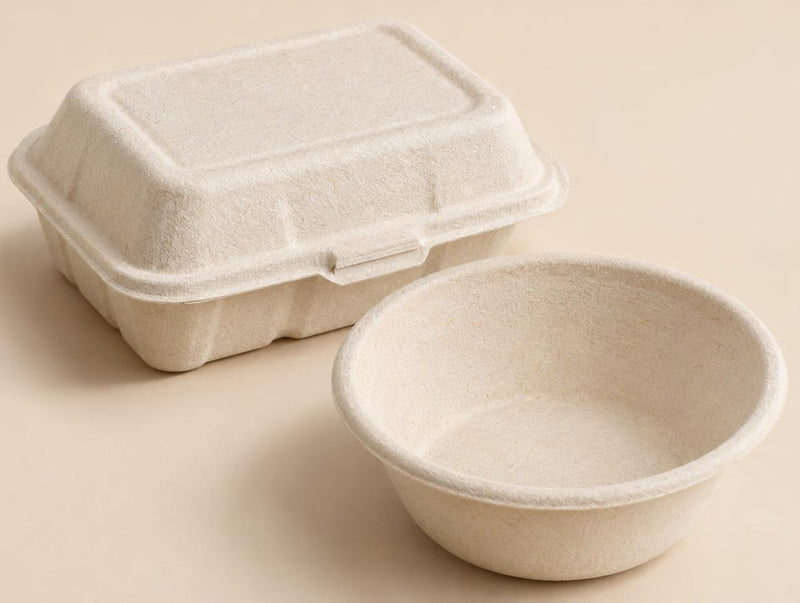
Bagasse takeaway packaging

Sugarcane fibre

Bagasse

Moulded sugarcane fibre, a by-product of sugar production. Sturdy and heat tolerant.

Good for
Hot and wet food, microwaving and freezing.
Watch out
Food-soiled bagasse does not go in paper recycling.
Disposal
Industrially compostable, and usually home compostable when uncoated. Put food-soiled bagasse in food or compost waste.
Found in
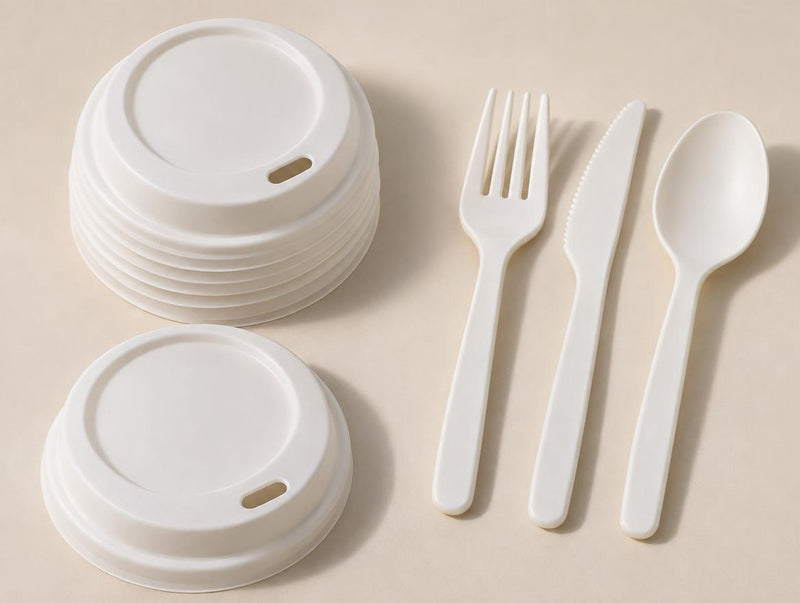
Clamshells, bowls, plates, trays, hot cup lids
Shop bagasse products
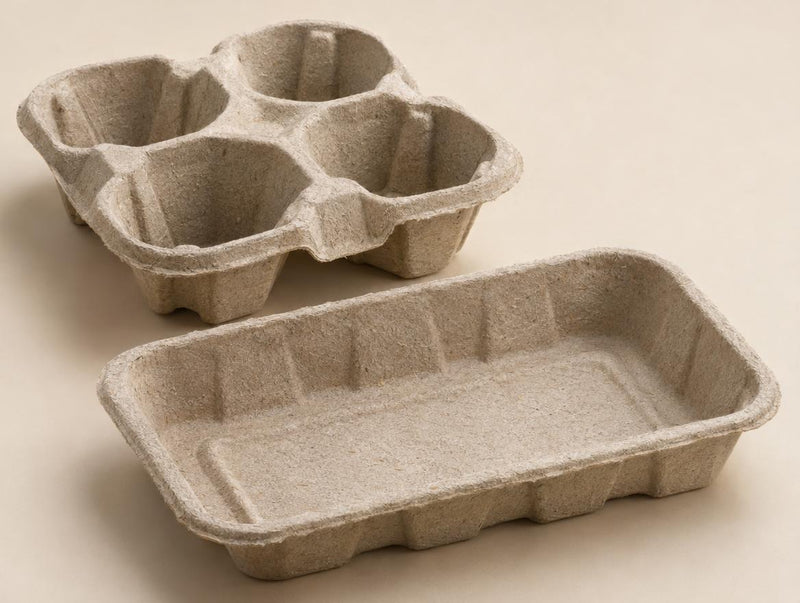
Moulded fibre takeaway packaging

Paper pulp

Moulded fibre

Pressed paper pulp, used for cup carriers and trays.

Good for
Carrying drinks and dry items.
Watch out
Keep it clean if you want to recycle it.
Disposal
Compostable, and recyclable with card when clean.
Found in
Cup carriers, trays
Kraft paper with PE lining takeaway packaging

Paper board

Kraft paper with PE lining

Paper board. Bowls and soup containers for wet food have a thin PE (plastic) lining to stop leaks.

Good for
Salads, soups, hot and cold food boxes, and custom printing.
Watch out
The plastic lining changes how it can be disposed of.
Disposal
Check the product page for disposal advice.
Found in
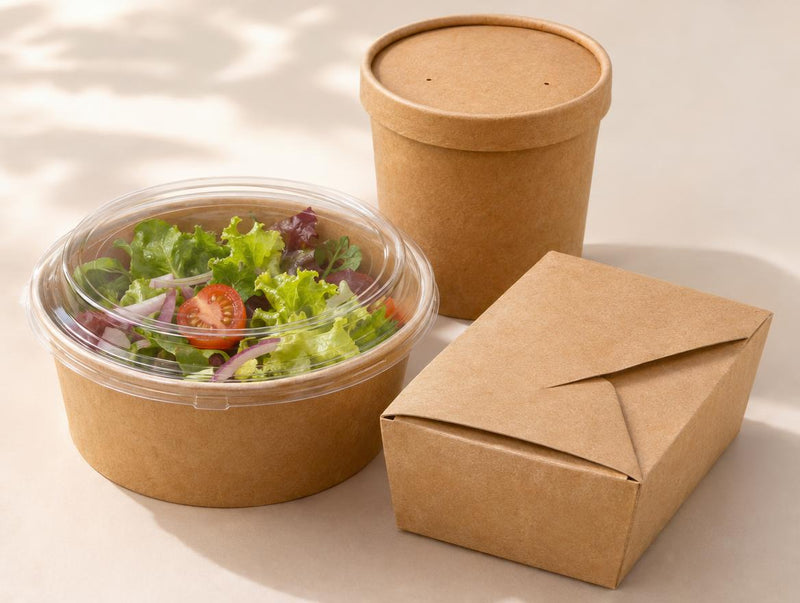
Salad bowls, soup containers, food boxes, hot cups
Shop kraft products
Paper with water-based lining takeaway packaging

Aqueous or Paper2Paper

Paper with water-based lining

Paper board with a water-based (aqueous) barrier instead of a plastic film.

Good for
Cups and tubs where you want to avoid a plastic lining.
Watch out
Ask us which products use it: it is not on every size.
Disposal
Water-based linings avoid a plastic film. Check the product page for disposal advice.
Found in
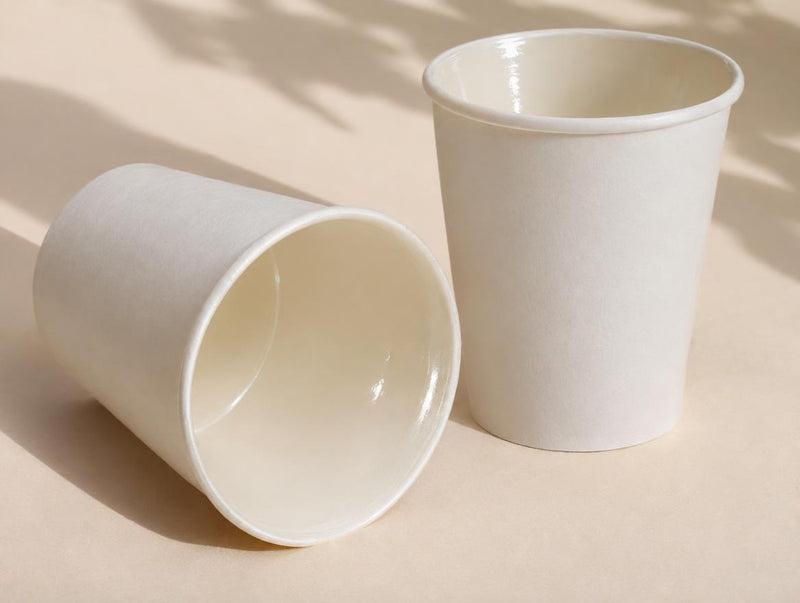
Hot cups, ice cream tubs
Shop paper products
Paper with PLA lining takeaway packaging

Plant-based lining

Paper with PLA lining

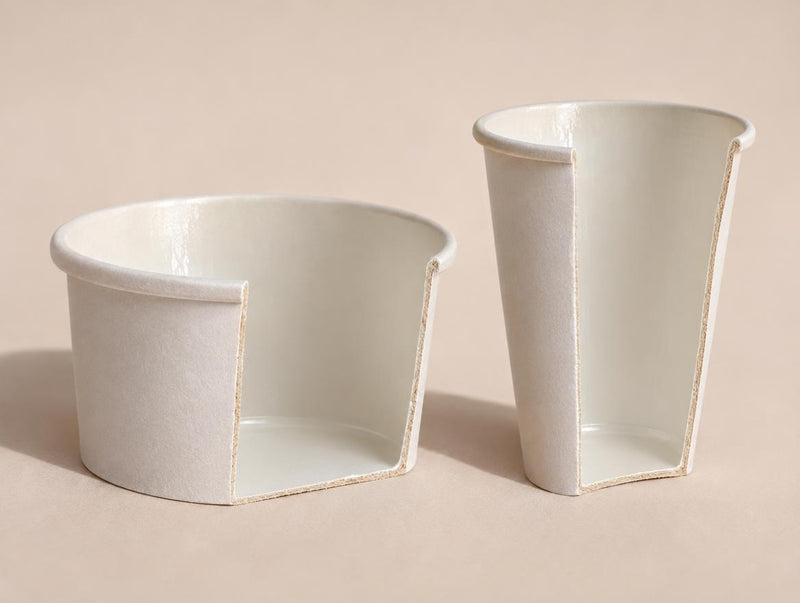
Paper board lined with PLA, a plastic made from plant sugars, instead of PE.

Good for
Hot and cold cups and bowls where an industrial composting service is available.
Watch out
Compostable in industrial facilities only. It is not recyclable.
Disposal
Industrial composting only. Without a commercial composting service it goes in general waste.
Found in
Hot cups, cold cups, bowls
PLA takeaway packaging

Polylactic acid

PLA

A plant-based plastic made from plant sugars.

Good for
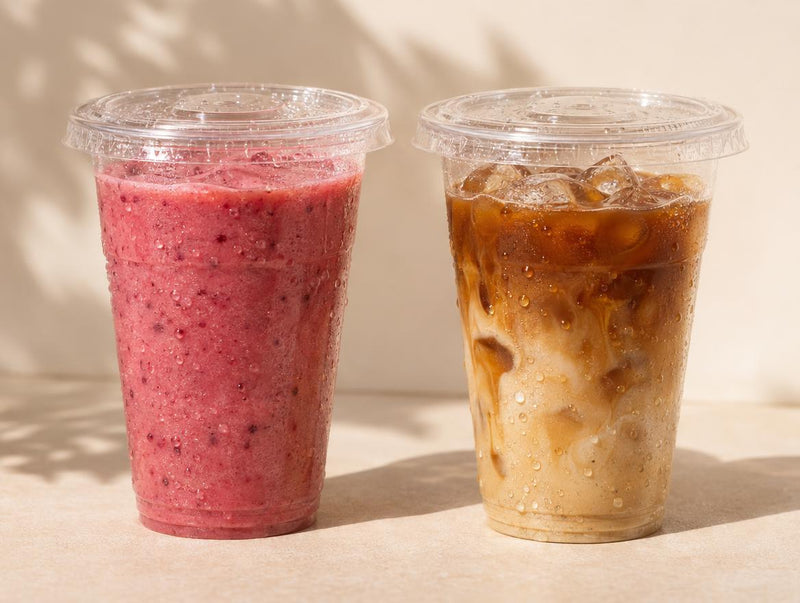
Clear cold cups and lids.
Watch out
Cold use only: it softens with heat. Not home compostable and not recyclable.
Disposal
Compostable in industrial facilities only.
Found in
Clear cold cups, lids, straws
Shop pla products
CPLA takeaway packaging

Heat-treated PLA

CPLA

PLA that has been heat-treated so it takes more heat.

Good for
Hot cup lids and some cutlery.
Watch out
It takes more heat than PLA, but it is still a compostable plastic, not a recyclable one.
Disposal
Industrially compostable.
Found in
Hot cup lids, cutlery
PET and rPET takeaway packaging

Clear plastic

PET and rPET

Clear, lightweight plastic. rPET contains recycled plastic.

Good for
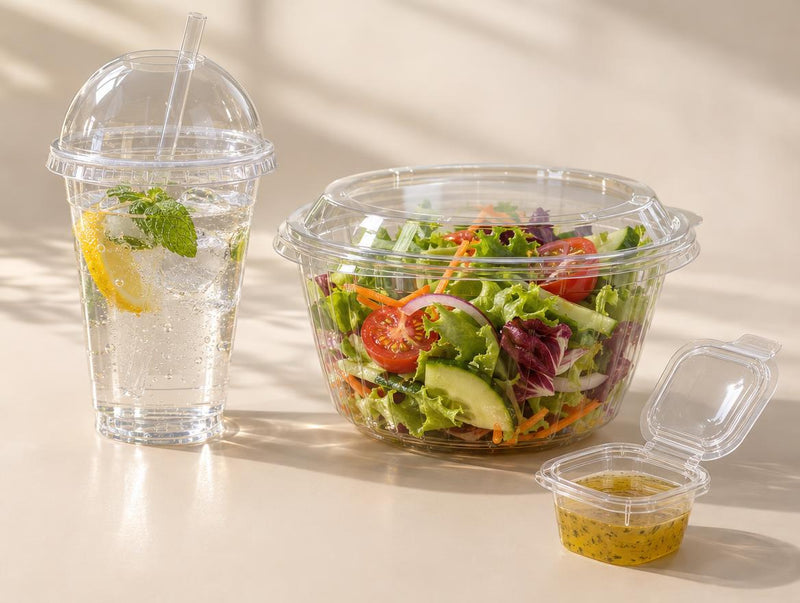
Cold drinks, deli pots and lids where people want to see the food.
Watch out
Cold use only.
Disposal
Recyclable when rinsed.
Found in
Clear cold cups, lids, deli pots, sauce pots
Shop PET products
PP takeaway packaging

Polypropylene

PP

A tough plastic that takes hot food.

Good for
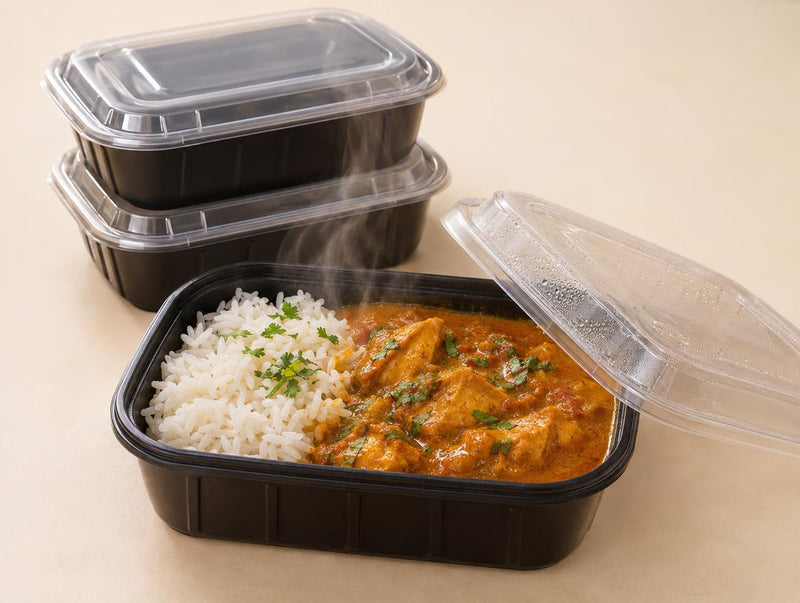
Hot food, microwaving and reheating.
Watch out
Not compostable.
Disposal
Recyclable where collected. Rinse it first.
Found in
Microwaveable containers, some lids
Shop pp products
Birchwood takeaway packaging

Wood

Birchwood

Natural wood from birch.

Good for
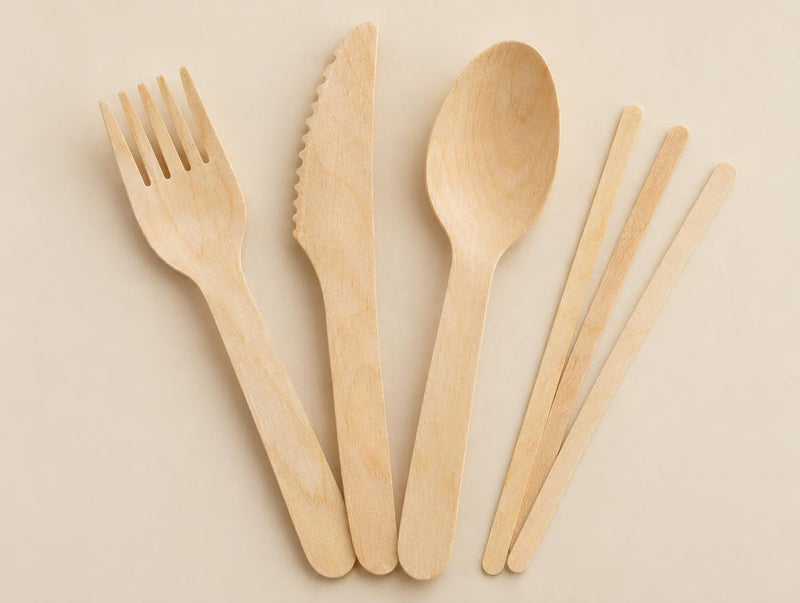
Cutlery and stirrers for hot or cold food.
Watch out
Keep it dry in storage.
Disposal
Natural and compostable.
Found in
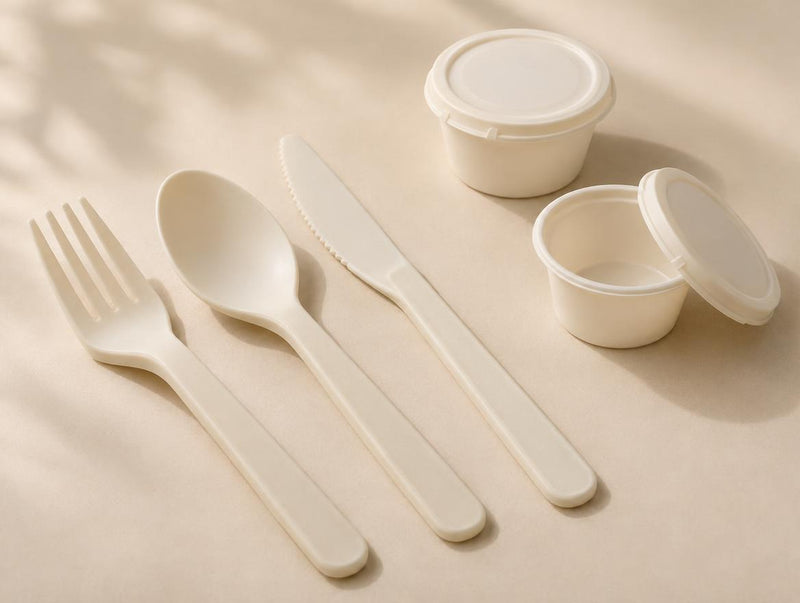
Forks, knives, spoons, stirrers
Shop birchwood products
Cornstarch blend takeaway packaging

Cornstarch PSM

Cornstarch blend

A blend of plant starch and PP plastic, which makes it strong enough for hot and wet food.

Good for
Cutlery and sauce pots for hot food.
Watch out
Because it contains plastic, do not put it in compost.
Disposal
Check the product page for disposal advice.
Found in
Cutlery, sauce pots
Shop cornstarch products

Which bin

Where it goes after use.

The right material only helps if it ends up in the right bin. This is the usual route; your waste collector has the final say on what they accept.

Dry recyclingRinsed plastics and clean card

PET and rPET when rinsed, PP where collected, and clean moulded fibre with card.

Food or compost wasteFood-soiled fibre and wood

Food-soiled bagasse and birchwood cutlery.

Commercial compostingOnly with a service

PLA, CPLA and PLA-lined paper need a commercial composting service. Without one, they go in general waste.

Check the product pageLined paper and blends

PE-lined and water-based-lined paper, and cornstarch blends: each product page says how to dispose of it.

Our approach

Going greener should be easy, affordable and honest.

Element started to make sustainable packaging practical for food businesses. We match each material to the food it holds and the bin it will end up in, and we tell you plainly when something is not recyclable.

Honest labels

We say what a material is and how to dispose of it, including when the answer is general waste. No vague "eco" claims.

Matched to the job

Hot food, cold drinks, microwaving or freezing: the right material depends on what goes inside and how it is served.

Checked on every product

Each product page states its material and how to dispose of it, so your team and your customers can get it right.

FAQ

Packaging material questions.

What is the difference between compostable and recyclable packaging?

Compostable packaging breaks down into compost under the right conditions. Recyclable packaging is collected and made into new material. They go in different bins, and one is not better than the other in every case. Industrially compostable items need a commercial composting service; if you do not have one, a recyclable option may suit you better.

Is bagasse home compostable?

Bagasse is industrially compostable, and usually home compostable when uncoated. Food-soiled bagasse goes in food or compost waste, not paper recycling.

Can PLA cups go in the recycling?

No. PLA is compostable in industrial facilities only. It is not recyclable and not home compostable, so without a commercial composting service it goes in general waste.

Are paper coffee cups recyclable?

Most paper cups have a thin PE (plastic) lining as a waterproof barrier, so check the product page before putting them in paper recycling. PLA-lined cups are compostable in industrial facilities only, and water-based linings avoid a plastic film.

Which packaging is best for hot food?

Use PP, bagasse, paper hot cups or CPLA lids. PLA and PET are for cold food and drinks only.

Which takeaway packaging is microwave safe?

PP containers and bagasse are microwave safe. For other products, check the product page.

Is your bagasse PFAS-free?

Our bagasse lines are listed as PFAS-free on their product pages where that applies.

Can I still use polystyrene food containers?

No. Expanded polystyrene (foam) food containers are banned in England, and we do not sell them.

Not sure which material fits?

Tell us what you serve and how, and we will suggest the right packaging and send samples.

Compare products

{"one"=>"Select 2 or 3 items to compare", "other"=>"{{ count }} of 3 items selected"}

Select first item to compare

Select second item to compare

Select third item to compare

Compare